Weaving is one of the creative traditions of Sasak women in Lombok. In the past, every Sasak woman was expected to learn how to weave; it marked her passage into adulthood and was a condition before she could marry. Sade Traditional Village is one place where visitors can learn about weaving and its role in Sasak culture.
How Woven Cloth Is Made in Sade Traditional Village
The work begins with raw cotton and ends with thread that is ready for the loom. These are the stages:
1. Turning Cotton into Thread
The women of Sade get their cotton from other villages, because the land around the hamlet is planted with rice, their staple food. Here is how that cotton becomes thread:
- Bebetuk:
The cotton is softened with a traditional tool made of bamboo and string. The work is done inside a mosquito net so the fibers do not fly everywhere. - Gulung (rolling):
Once soft, the cotton is rolled into long round bundles of about 15 cm. - Minsah:
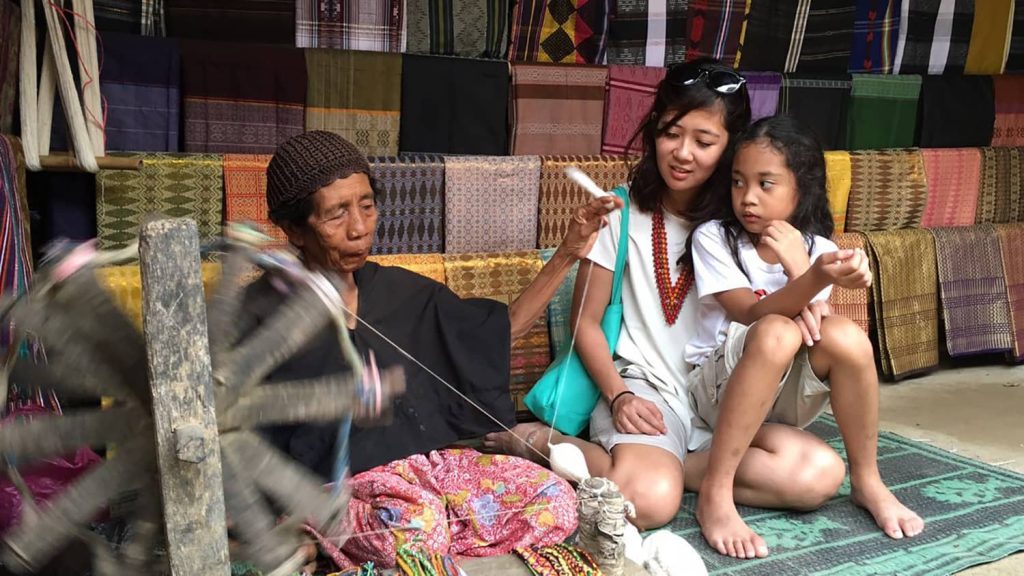
Using a traditional tool called Arah, the cotton is spun into thread. - Pewarnaan (dyeing):
The finished thread is colored with natural materials such as taum leaves or tree bark.
Note: Spinning the thread is usually done by the older generation, since the skill is becoming rare among younger generations.
2. Weaving the Cloth
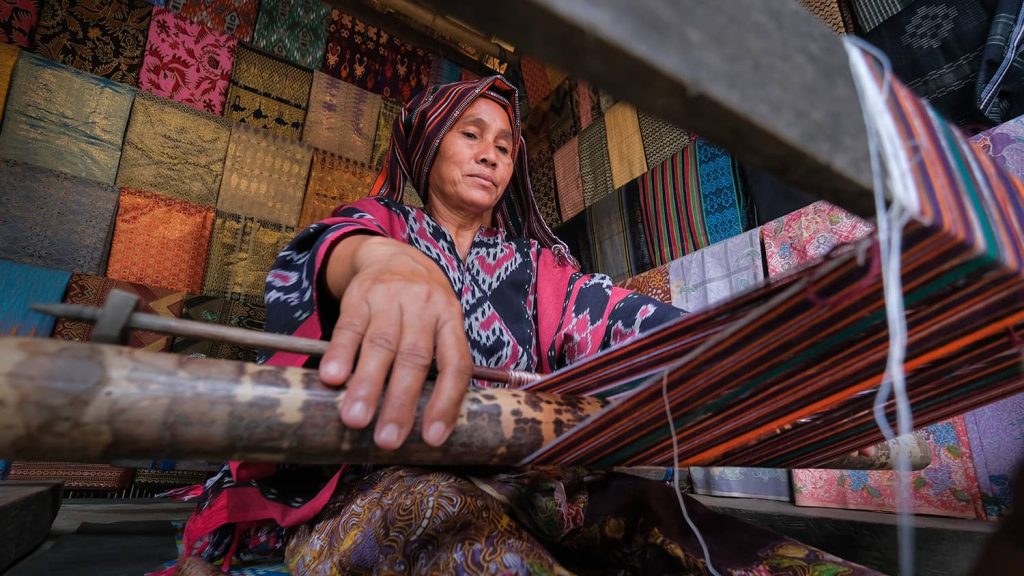
Once the thread is ready, the weaving itself begins. These are the stages:
- Ngani:
Setting up the frame of the cloth and deciding on the motif and the size to be woven. This stage uses a traditional tool called Aneq. - Nensek:
The final stage of weaving, slipping the thread into the frame that has already been set up.
Signature Sasak Weaving Motifs:
Among the best-known Sasak motifs are Songket, Selulut, Kembang Komak, Ragi Genap, Kemalu, Sabuk Anteng. These days the weavers also work to order, including motifs woven with a customer’s name, as a creative twist on the tradition.

One Day Trip Kuta Mandalika Lombok & Sasak Tour
From
IDR 210,000
per person
Traditional Weaving Tools
Weaving here relies on a set of traditional tools, among them:
- Lekot: Worn at the weaver’s waist to hold the cloth in place.
- Berire: Tightens the weave and keeps the threads close together.
- Gun: Wood and thread that form the frame of the cloth.
- Penggulung: The bamboo roller used to wind up the woven cloth.
- Jajak: Wooden supports, used in pairs.
- Tutuk: The piece the thread is wound around to form the frame of the cloth.
- Apit: A divider between the thread and the tutuk so the two do not rub against each other.
- Pendiring: Holds the thread that is about to go into the cloth.
- Terudak: A small bamboo stick for feeding thread from the pendiring into the frame.
Prices and Location
Once a piece is finished, the women of Sade sell it to local and international visitors. Prices range from tens of thousands to millions of rupiah, depending on the motif and how demanding the piece was to weave.
Sade Traditional Village sits in Rembitan, Pujut District, Central Lombok. It is easy to reach, only about 30 minutes from Lombok International Airport.
A visit to Sade gives you more than a well-made piece of woven cloth. You also get a close look at Sasak culture as it is still lived today.
For a visit to Sade alongside other nearby stops, compare Lombok day tours. For a longer stay, browse Lombok tour packages and confirm which cultural visits are included in your chosen itinerary.