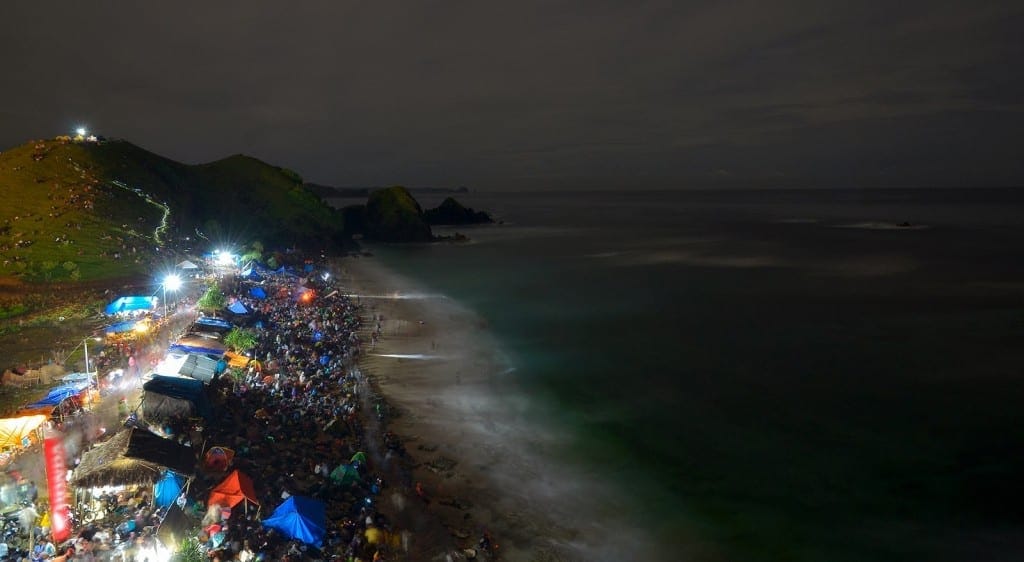
Once a year, usually in February when the west monsoon arrives, thousands of people gather on the beaches of southern Lombok before sunrise. They come for one thing: the appearance of nyale, colorful sea worms believed to be the reincarnation of Princess Mandalika. This is the Bau Nyale Festival, one of Indonesia’s oldest and most distinctive cultural celebrations, centered at Seger Beach in Kuta, Central Lombok.
If you’re planning a trip to Lombok in early year, this festival deserves a spot on your itinerary. It’s not just about catching sea worms before dawn. There are theatrical performances, cultural parades, traditional Sasak stick fights, and music concerts that run all night. This guide walks you through the essentials: what the festival means, when it happens, where to go, what to bring, and a few insider tips from our local team in Lombok.
What Is the Bau Nyale Festival?
Bau Nyale comes from the Sasak language, the native tongue of Lombok’s indigenous people. Bau means “to catch” and nyale refers to a type of sea worm. The literal translation is “catching sea worms.”
But these aren’t ordinary worms. Nyale (scientific name Eunice fucata, also called palolo worms) are slim, multicolored creatures, ranging from red and green to yellow and blue. They live in coral crevices and the sandy seabed. What makes them remarkable is their timing. They surface only once a year, on the southern coast of Lombok, for two or three nights right before dawn.
The Sasak people have been catching nyale for centuries. Records suggest the tradition predates the 16th century. Today, the festival is recognized as a national cultural event and listed in Indonesia’s official tourism calendar.
Two Types of Nyale
Locals distinguish between two appearances:
- Nyale air: appears on the first night, in larger numbers but less prized
- Nyale hijau (green nyale): appears on the peak night, considered more valuable and read as a sign of a good harvest year ahead
For Sasak farmers, the size and quantity of the nyale catch is a forecast for the coming agricultural season.
The Legend of Princess Mandalika
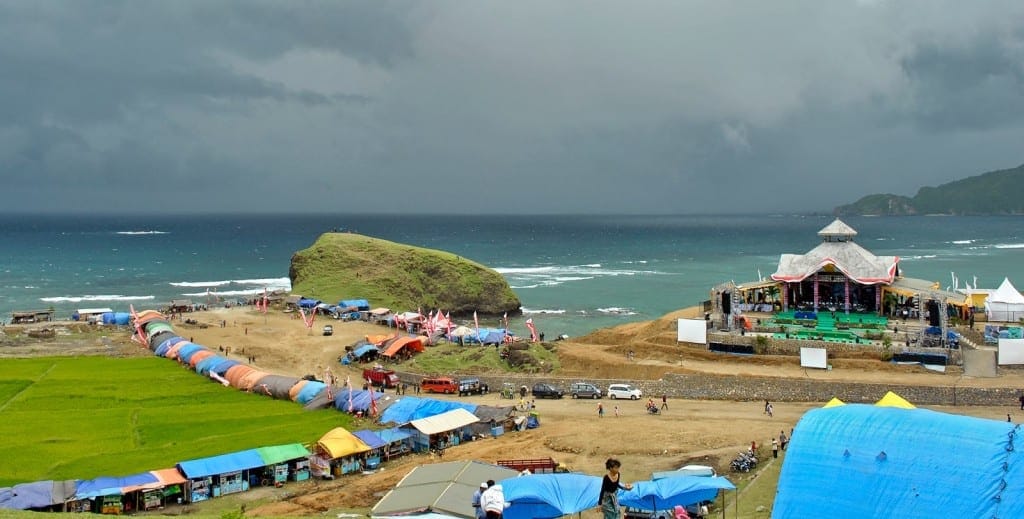
The festival traces back to a legend passed down through generations of the Sasak community.
Long ago, in the southern part of Lombok, there was a kingdom called Tunjung Bitu, ruled by King Tonjang Beru. The king had a daughter named Mandalika, known across the islands for her beauty, kindness, and wisdom. As her reputation spread, princes from neighboring kingdoms came to ask for her hand in marriage.
Mandalika faced an impossible choice. She didn’t want to reject any of them, but choosing one would spark a war between the kingdoms—a conflict that would devastate her people. After long contemplation, she made a decision.
She invited every prince and their followers to gather at Seger Beach before dawn on the 20th day of the 10th month of the Sasak calendar. When the day arrived, she stood on a coastal rock and told them she could not choose one prince. Instead, she would give herself to all the people of Lombok.
Then she leapt into the sea.
Her body was never found. Instead, the surrounding waters filled with thousands of colorful sea worms that had never been seen before. The Sasak believe these worms, the nyale, are her reincarnation, returning each year as a blessing to her people.
When Does Bau Nyale Take Place?
The festival doesn’t follow the Gregorian calendar. It uses the Sasak lunar calendar, with the peak falling on the 20th day of the 10th month. In modern terms, that usually translates to February, occasionally early March.
The exact date shifts each year and is determined through a traditional gathering called Sangkep Warige.
What Is Sangkep Warige?
Sangkep Warige is a council of Sasak elders, customary leaders, and community representatives who meet weeks before the festival to set the official date. Their decision is based on natural signs: the sound of the tengkere (a marine creature), the position of the Rowot star, the lunar cycle, alongside the alignment of the Sasak, Hijri, and Gregorian calendars.
Once the date is announced, hotels and tour operators start preparing. The official date is usually shared a few weeks before the event, so plan ahead and check with local sources or our team for the latest schedule.
Best Time to Arrive
The peak moment happens between 3:00 AM and 5:00 AM local time, when the nyale begin to surface. But the cultural program starts the afternoon before, with parades, performances, and a night concert.
Our recommendation: arrive at the venue by late afternoon the day before. If you only show up before dawn, you’ll miss the theatrical drama and the night festivities, which are arguably the highlight.
Where to Witness Bau Nyale
The tradition is celebrated along the entire southern coast of Central Lombok, with 16 different beaches hosting their own version of the ritual. The main event happens at Seger Beach in Kuta.
Seger Beach — The Heart of the Festival
Seger Beach sits in Kuta village, Pujut sub-district, about 65 km south of Mataram and 16 km from Lombok International Airport. Right next to the beach is Seger Hill, the spot where Princess Mandalika is said to have made her sacrifice. The hill also serves as the main stage for the night concert and a great viewpoint for sunset.
This is where the biggest crowds gather and where you’ll find the most complete program of events.
Other Beaches Hosting Bau Nyale
If you’d rather avoid the main crowds, several other beaches host their own ceremonies:
- Kaliantan Beach in East Lombok, quieter, more intimate, closer to local family rituals
- Selong Belanak Beach, one of Lombok’s most beautiful beaches with a relaxed atmosphere
- Tanjung Aan Beach, has hosted the main event in past years
- Mawun Beach, less touristy and more peaceful
For a deeper look at the southern beaches, see our guide to 7 stunning beaches in southern Lombok.
How to Get There
Reaching Seger Beach is straightforward:
- From Lombok International Airport (LOP): about 30–40 minutes by car via the Mandalika toll road or regular route. Distance is roughly 16 km.
- From Mataram or Senggigi: 1.5 to 2 hours through the southern route, passing Praya.
- From Bali: fly to Lombok International Airport (under an hour), then drive south to Kuta.
A practical note: arrange your transport or rental car well in advance. On peak festival days, the road into Seger Beach can be jammed for one to two hours.
What to Expect at the Festival
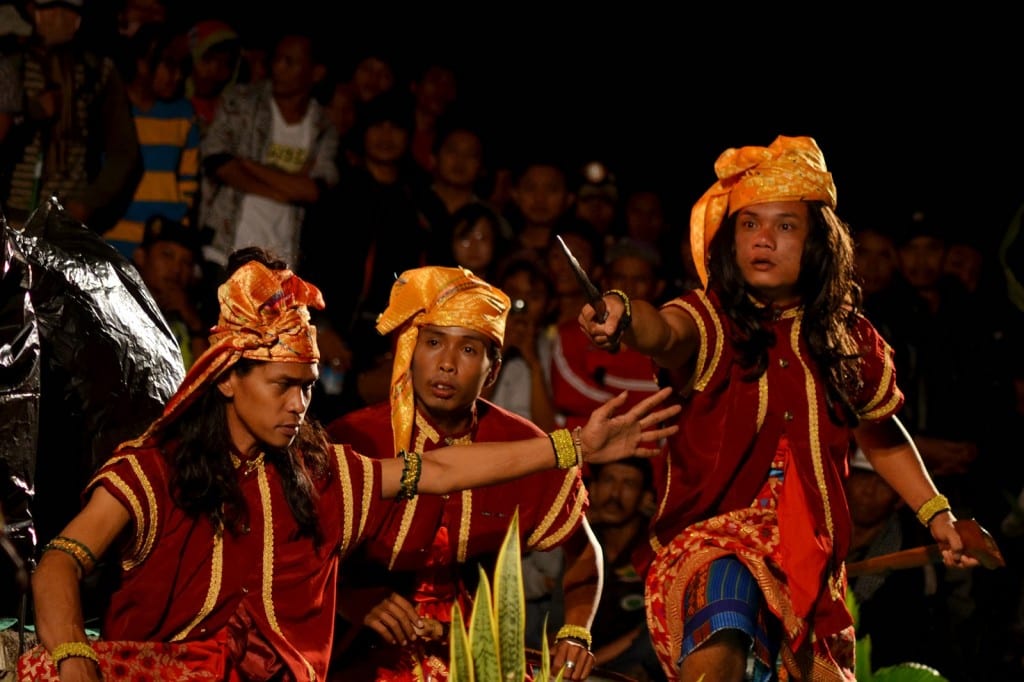
This isn’t just a pre-dawn beach activity. The cultural program is what makes Bau Nyale memorable, and several events take place over multiple days.
Cultural Parade
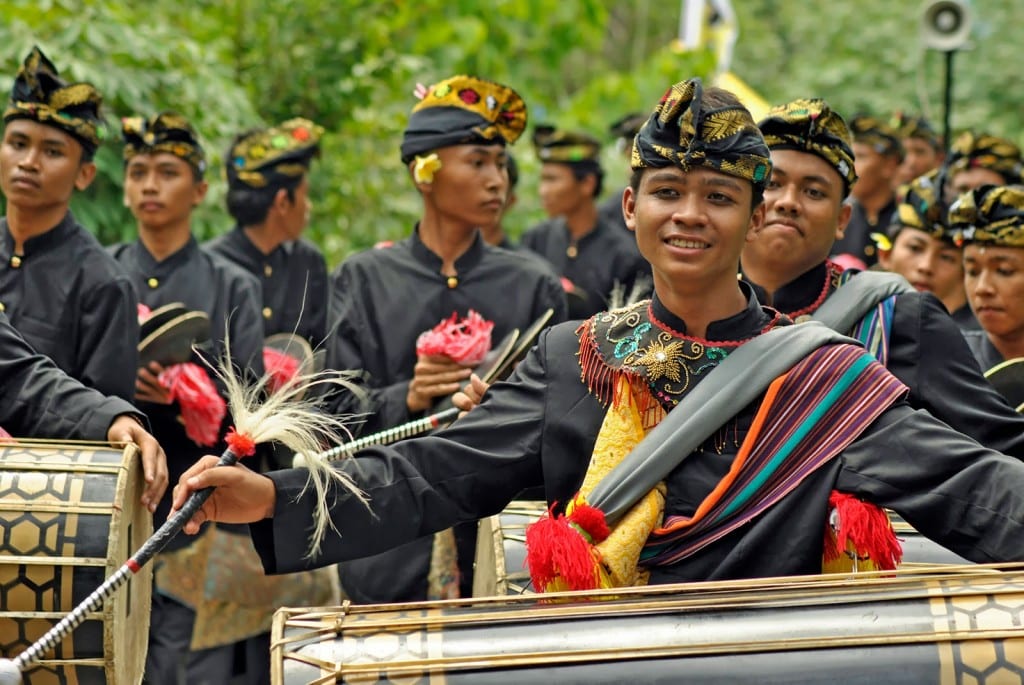
The festival opens with a parade. Locals dress in full traditional Sasak attire, accompanied by Gendang Beleq, the large ceremonial drums of Lombok. The parade usually starts at Seger Art Market and moves toward Seger Beach.
The Princess Mandalika Theatrical Drama
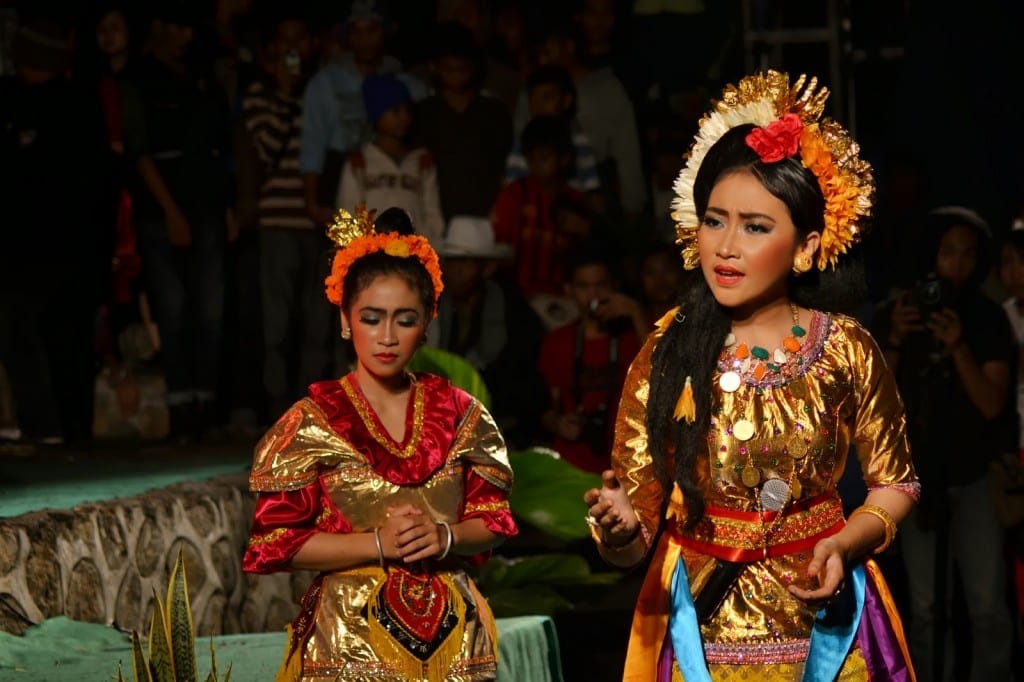
This is one of the most anticipated performances. Local actors retell the story of Princess Mandalika, from her famed beauty and the conflict among her suitors to her final leap into the sea. Performed on the beach with the ocean as a backdrop and traditional Sasak music in the background, it’s an atmospheric experience, especially at night.
Princess Mandalika Pageant
Don’t expect a typical beauty contest. Sasak women compete based on knowledge of local culture, traditional values, and how they represent their heritage. The winner serves as the year’s Princess Mandalika ambassador for tourism and cultural events.
Peresean — The Sasak Stick Fight
Peresean is a traditional martial art unique to the Sasak. Two men face off in a one-on-one match, armed with a rattan stick (penjalin) and a buffalo-hide shield (ende). A referee called pakembar oversees the fight, which is performed with traditional music and a structured set of rules.
For Sasak culture, peresean symbolizes courage and is also believed to call rain for a good harvest. For visitors, it’s one of the most exciting parts of the festival to watch.
Night Concerts and Local Markets
When evening falls, the main stage transforms into a concert venue. Well-known national artists have performed here. The stage at Seger Hill has the ocean as a natural backdrop, which adds something to the atmosphere even before the music starts.
Around the venue, food stalls and warungs sell local snacks and drinks. It’s a good time to try Lombok specialties.
Lesser-Known Sasak Traditions
Smaller but worth noticing:
- Betandak: a tradition of exchanging rhyming verses between young Sasak men and women
- Bejambik: gifting tokens of affection to a partner or potential partner
- Belancaran: a sea cruise on traditional fishing boats decorated with colorful ornaments
Joining the Pre-Dawn Sea Worm Hunt
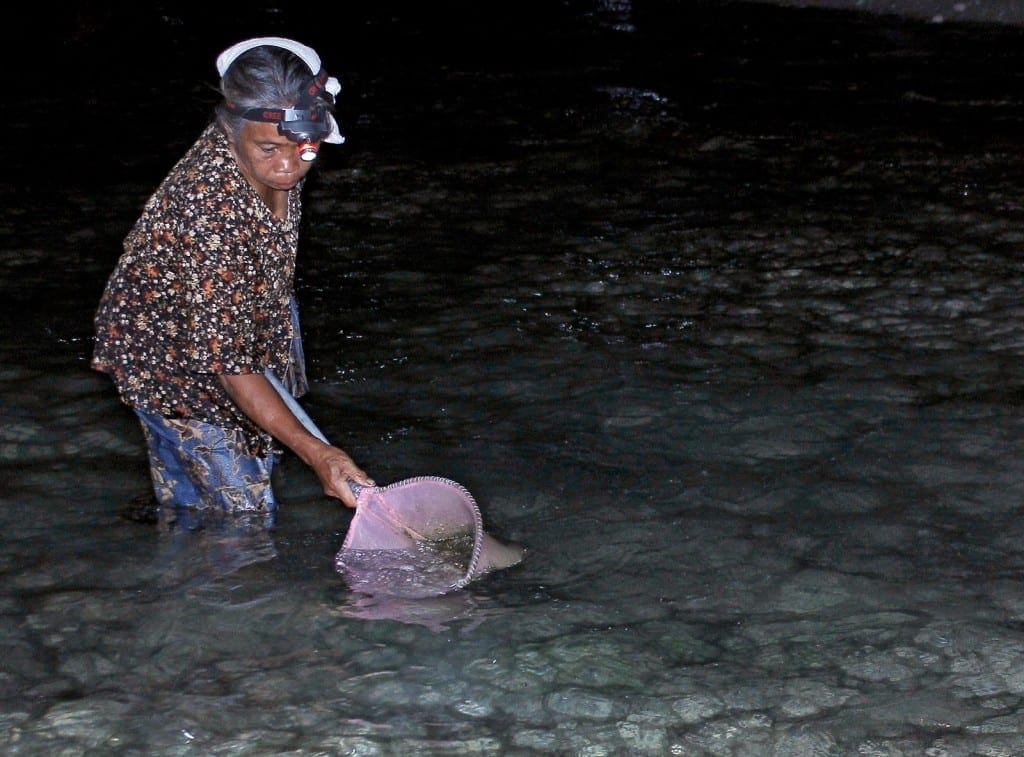
If you want to wade in and try catching nyale yourself, here’s what you need.
What to Bring
- A scoop net (called serok) because nyale are slippery and your hands won’t work
- A container like a small bucket, plastic bottle, or any sealable jar
- A flashlight or headlamp since you’ll be in the water in the dark
- Clothes you don’t mind getting wet, shorts, t-shirt, water-friendly sandals
- A towel for after
Some warungs near Seger Beach sell scoop nets in the days leading up to the festival, but it’s safer to bring your own.
When to Get in the Water
Nyale typically surface between 3:00 and 5:00 AM, depending on the tide. Aim to be on the beach by 2:30 AM. Don’t show up after 5:30 AM. The worms vanish as the sun rises.
Local Etiquette
For Sasak families, this is more than a tourist activity. A few unwritten rules:
- Don’t compete with locals. They view nyale as a blessing from Princess Mandalika.
- Take only what you need. Leave plenty for everyone else.
- Respect any small rituals or prayers you see families performing.
- Don’t litter the beach. Bring your trash back.
Beyond Catching — Why Nyale Matters
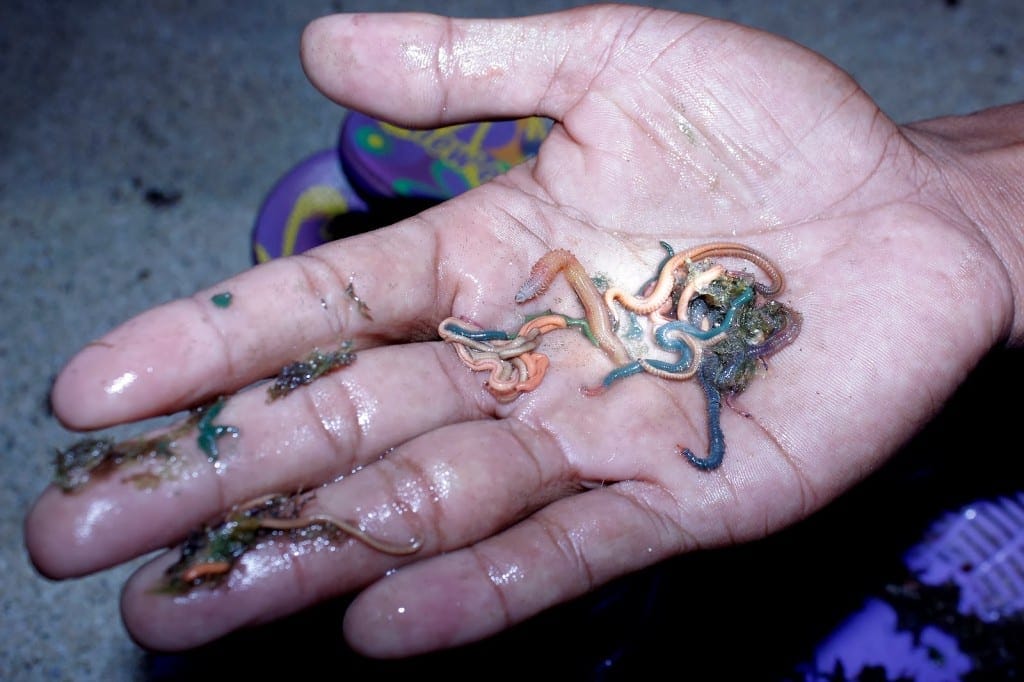
For the Sasak people, nyale carries layers of meaning beyond the worm itself.
Harvest forecast. A large nyale appearance signals a bountiful harvest year ahead. A poor showing prompts farmers to prepare for tougher conditions.
Natural fertilizer. Some catch is mixed into water and spread across rice fields as fertilizer, a practice that predates modern agriculture by centuries.
Traditional cuisine. The most popular preparation is Pepes Nyale: nyale mixed with grated coconut and spices, wrapped in banana leaves, and grilled over fire. The result is savory and aromatic. Some locals also make nyale soup or sambal nyale. The boldest method: eating them raw, fresh from the catch.
Health beliefs. Research has found nyale contain high protein levels. Locals also associate them with fertility and stamina, sometimes calling them the “Lombok aphrodisiac” with a knowing smile.
Tips from Our Local Team
As a tour operator based in Lombok, we have a few notes that don’t always show up in standard travel guides.
Arrive a day early. Traffic into Seger Beach gets heavy on the peak day. Consider staying in Kuta Mandalika or nearby the night before, so you can enjoy the area in the morning before the crowds.
Book accommodation at least a month ahead. Hotels in Kuta Mandalika fill up fast during festival days. Even villas and homestays around Tanjung Aan and Merese Hill get booked out.
Don’t miss Merese Hill. It’s only 10 minutes from Seger Beach and offers one of the best sunsets in Lombok. Many festival-goers skip it. Check our guide to Merese Hill for details.
Combine your trip with Sade Village. After the morning festival, you have the rest of the day. Sade Village is a traditional Sasak settlement with original houses and active weaving culture, just 30 minutes from Kuta. It pairs well with the festival’s cultural theme.
Pair with a quieter beach. Mawun Beach is calmer and a good spot for an afternoon rest after a busy morning at Seger. See our Mawun Beach guide for access details.
Bring cash. Many local food stalls and small vendors don’t accept digital payments yet.
Pack a power bank. You’ll be taking a lot of photos, and the events run from afternoon to dawn.
Sunscreen for the day after. Lombok’s sun is strong if you stay on the beach into the morning.
Frequently Asked Questions
Can foreign tourists join the sea worm hunt?
Absolutely. The festival is open to everyone, and locals often welcome international visitors who want to participate. Just respect the customs and don’t compete aggressively for catches.
Is there an entry fee?
No. The festival is free. You only pay for transport, food, and accommodation.
Is nyale safe to eat?
Yes. The Sasak have eaten nyale for centuries. For a first try, we suggest the cooked version, like Pepes Nyale, rather than raw.
I’m visiting Lombok outside February. Can I still see the festival?
Unfortunately not. Bau Nyale happens once a year on the Sasak calendar. But Seger Beach, Seger Hill, and the Sasak culture at Sade Village are accessible year-round.
Can I see the festival at beaches other than Seger?
Yes. Kaliantan Beach in East Lombok hosts a quieter, more intimate version of the ritual. Mawun Beach and Selong Belanak sometimes have smaller programs of their own.
Plan Your Bau Nyale Trip with The Langkah Travel
Bau Nyale is one of the few opportunities to experience a living Sasak tradition, where legend, ritual, performance, and natural phenomenon come together in a single event.
If you’d rather skip the logistics like transport, accommodation, and schedule planning, our team is ready to help. Our Kuta Mandalika & Sasak Day Tour and works as a base for exploring the area before or after the festival.

One Day Trip Kuta Mandalika Lombok & Sasak Tour
From
IDR 210,000
per person
For longer trips, browse our Lombok Tour Packages to find an itinerary that fits.
Reach out to The Langkah Travel via WhatsApp or our website for a free consultation and a custom itinerary built around your dates and interests.