Of the three Gili Islands off the northwest coast of Lombok, Gili Air is the one most travelers settle on once they figure out what they actually want from an island. It is not a party scene like Gili Trawangan, and it is not as quiet as Gili Meno. The vibe sits comfortably between the two, with enough beach bars, cafes, and dive shops to keep your days full, and enough silence at night to remember you are on a tiny island in the middle of nowhere.
The island is small. About 1.73 km², a thirty-minute walk across, and a ten-minute boat ride from the Lombok mainland. There are no cars, no motorbikes, and no traffic of any kind. You move on foot, by bicycle, or on a horse-drawn cart called a cidomo.
We have been guiding visitors to Gili Air since 2012. This is the practical guide we wish someone had handed us before our first trip out — covering how to get there, what to do, where to stay, and the small things travel blogs usually miss.
Gili Air vs Gili Trawangan vs Gili Meno: Which One Is Right for You?
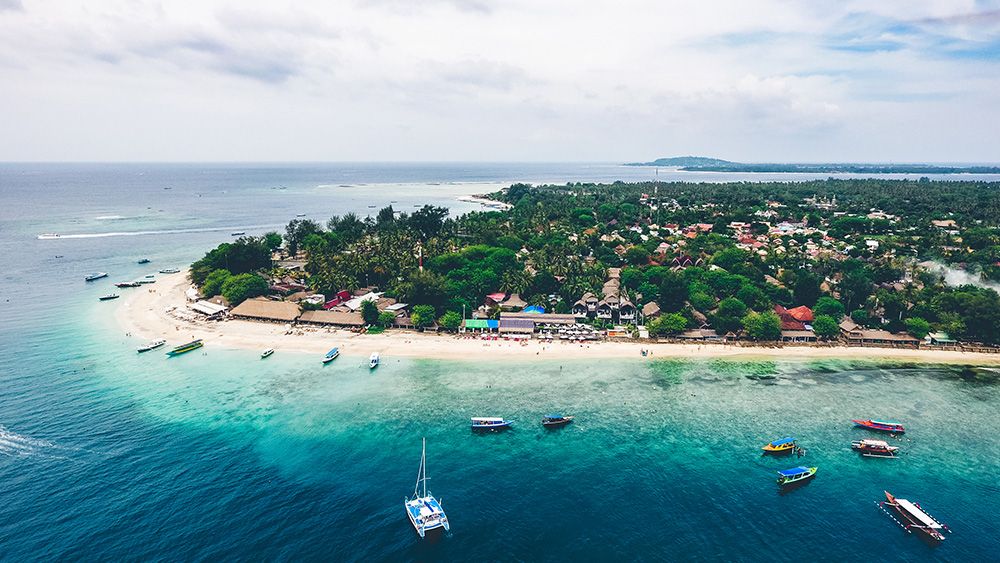
The Gili Islands are a trio of small islands sitting off Lombok’s northwest coast. They look similar from a distance, but each one attracts a different kind of traveler.
- Gili Trawangan (Gili T) — the biggest and busiest. Beach clubs, full moon parties, the whole social scene. Good if you are travelling solo, with friends, or want nightlife as part of your beach holiday.
- Gili Meno — the smallest and quietest. Few restaurants, even fewer bars, and a lot of long stretches of empty beach. Best for honeymooners and people who genuinely want to disconnect.
- Gili Air — the middle ground. Quiet enough to rest, lively enough to find good food and a sunset bar without much effort. Most popular with couples, families, and anyone visiting the Gilis for the first time.
If you are debating between the three, the honest answer most of our guests land on after their trip: Gili Air is the safest choice for a first visit. You can always day-trip to the other two from there.
How to Get to Gili Air
Gili Air does not have an airport. You will arrive by boat, either from Bali or from Lombok.
From Bali (Most Common Route)
Most international travelers reach Gili Air by fast boat from Bali. Boats depart from several harbors:
- Padang Bai (most common, eastern Bali, 1.5 hours)
- Sanur (south Bali, 2 to 2.5 hours)
- Serangan (south Bali, similar timing)
- Amed (northeast Bali, around 1 hour)
Most fast boats stop at Gili Trawangan first, then Gili Air, sometimes Gili Meno. Total journey from Bali to Gili Air is roughly 1.5 to 2.5 hours, weather depending. On rough days the boat takes longer or gets cancelled altogether.
Honest tip: book the morning departure. The sea in the channel between Bali and Lombok gets choppy by late morning, especially during the shoulder seasons. If you are prone to seasickness, this matters more than you might think.
Round-trip ticket prices typically range IDR 650,000 to 1,200,000 (around USD 40 to 80), depending on the operator and how far in advance you book. Add the harbor tax (around IDR 10,000 to 20,000) on arrival, which most fast boat companies do not include.
From Lombok International Airport (LOP)
If you are flying into Lombok directly, the airport is in Praya, in south Lombok. Bangsal Harbor (the main jumping-off point for the Gilis) is about a two-hour drive north.
Options:
- Official airport taxi: around IDR 350,000 to 450,000 per car, fixed rate.
- Private car with driver: IDR 500,000 to 700,000 per day, useful if you plan to stop in Senggigi or sightsee on the way.
- Shared shuttle: some hotels offer shared transport at lower rates.
If you are staying in Senggigi or Mataram first, the drive to Bangsal is shorter, around 45 minutes to an hour.
From Bangsal Harbor to Gili Air
Once at Bangsal, you have three boat options:
| Boat type | Price (IDR) | Schedule |
|---|---|---|
| Public slow boat | 20,000–25,000 per person | Departs when full |
| Fast boat / shuttle | 80,000–100,000 per person | Set schedule |
| Charter speedboat | 350,000–500,000 per boat (max 10) | On demand |
Operating hours are usually 8:00 AM to 5:00 PM. Outside of those hours, you will need to charter a boat or wait for a private group to fill up.
Prices listed are based on our most recent checks. Confirm with the operator on the day, especially during high season when rates can shift.
Alternative: Teluk Nare Harbor (Faster Option)
A less-known shortcut: Teluk Nare Harbor, north of Senggigi. The boat from Teluk Nare to Gili Air takes only 10 minutes (versus 15 to 20 from Bangsal) and the harbor is significantly less chaotic. Some Bali fast boats also drop here. If your hotel is in the Mangsit-Senggigi area, this is the easier choice.
How to Get from Gili Air to Lombok
For the return journey to mainland Lombok, arrange a boat to Bangsal or a private speedboat to Teluk Nare. Confirm the arrival harbor before booking your onward car: Bangsal and Teluk Nare are different pickup points. Ask the boat operator for the departure time, check-in point, luggage allowance, and any additional charges.
If you are continuing to Lombok Airport, allow time for the boat crossing, disembarkation, road transfer, and airline check-in. Do not plan around the crossing time alone. Leave a buffer for delays; returning to mainland Lombok the day before an important flight gives you more flexibility.
When Is the Best Time to Visit Gili Air?
Lombok has two main seasons.
Dry season (May to September): the best window. Calm seas, clear water for snorkeling, low humidity, almost no rain. July and August are peak tourist months — book accommodation well in advance and expect higher prices. May, June, and September are the sweet spots: still dry, but quieter and cheaper.
Wet season (October to April): still visitable, but expect more rain, occasional rough seas, and the chance of cancelled boat crossings during storms. Underwater visibility for snorkeling can drop after heavy rain. December and January are also high-traffic for Indonesian holidays — quieter than July/August in terms of foreign tourists, but local travel demand is high.
Keep your plans flexible and check current sea conditions before crossing. The season alone does not guarantee calm water or clear snorkeling conditions.
Top Things to Do in Gili Air
1. Snorkel with Sea Turtles
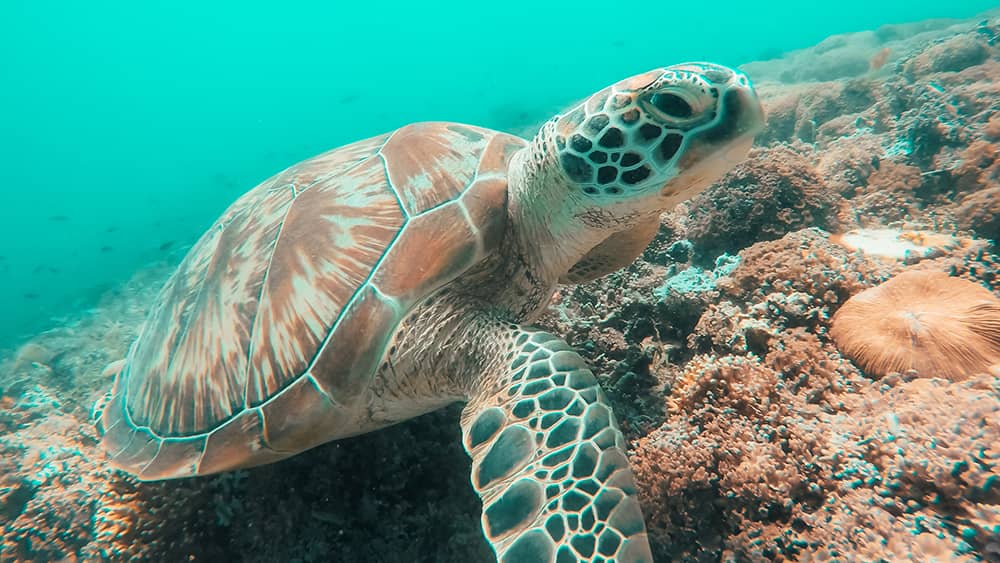
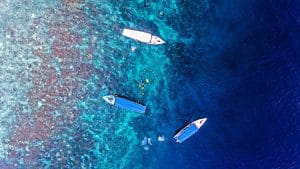
The waters around Gili Air are known for clear visibility (often 15–20 meters) and healthy reef populations. The most popular snorkel spots:
- Turtle Point — the headline experience. Green sea turtles are seen here regularly, sometimes within minutes of getting in the water.
- Air Wall — a wall of coral on the northwest side, popular for both snorkeling and diving.
- Frogfish Point — quieter spot known for unusual macro life.
- Underwater Sculptures (Gili Meno) — the famous “Nest” sculpture is just off Gili Meno, easily reached on island-hopping snorkel tours.
Snorkel gear rental is around IDR 35,000 to 50,000 per day. Group snorkel tours (4 hours, 3 stops) usually cost IDR 150,000 to 250,000 per person.
2. Get Your PADI Certification
Gili Air has several PADI-affiliated dive shops. Open Water courses run 3 to 4 days at around IDR 4,500,000 to 5,500,000 (USD 280 to 350), including certification and equipment. The combination of warm water, easy conditions, and consistent marine life makes this one of the more popular places in Indonesia to learn to dive.
Even if you are already certified, fun dives are widely available and the local sites are well-suited for relaxed diving.
3. Cycle Around the Island
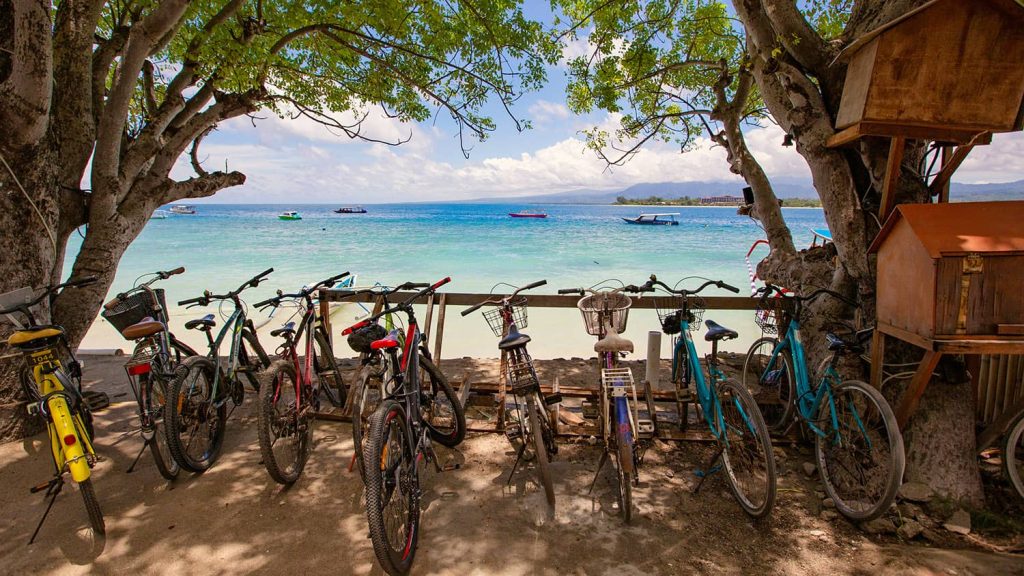
You can ride around the entire island in under an hour. Bicycle rental is roughly IDR 30,000 to 50,000 per day, often free if you are staying at a hotel that provides them.
A small but useful tip: ask for a bike with fat tires. Some sections of the path are sandy and narrow tires struggle. Riding clockwise puts the sunset on your right side toward late afternoon, which is the best time to be out.
4. Watch the Sunset (with Mount Agung in the Distance)
The west side of Gili Air faces Bali, and on clear evenings you can see the silhouette of Mount Agung rising on the horizon. Beach clubs along the western shore set out beanbags and play sunset music. The most popular spots are around Sunset Boulevard, near Sunset Point. Order a drink, claim a beanbag, and stay until the colors fade.
5. Try the Famous Sunset Swing
Several beach clubs have wooden swings set up over shallow water. At high tide they appear to float in the sea, which is exactly the photo people come for. The pink swing at PinkCoco is the most popular. There is no entrance fee — buy a drink at the beach club and the swing is yours to use.
6. Take a Cooking Class
A handful of small restaurants offer hands-on Indonesian cooking classes, usually 2 to 3 hours including a meal. Warung Sunny is one of the more well-regarded spots. Classes typically run IDR 200,000 to 350,000 per person and you cook everything from sambal to nasi campur.
7. Yoga and Wellness
Gili Air has a small but solid wellness scene. H2O Yoga offers an unusual aqua yoga class. Flowers & Fire Yoga Garden runs daily classes in a traditional setting. Drop-ins typically cost IDR 150,000 to 200,000.
8. Day-Hop to Gili Meno and Gili Trawangan
Public island-hopper boats run twice daily between the three Gilis (around 8:15 AM and 3 PM), at IDR 35,000 to 50,000 one way. If you have a few days, spend a morning on Gili Meno (great snorkeling, the underwater sculptures) and an afternoon on Gili T (more developed, easy to walk around, good restaurants). You can also book a 3-island snorkel tour that handles transport for you.
Where to Stay on Gili Air
Budget (under USD 25 per night)
Plenty of guesthouses and homestays sit in the central and eastern parts of the island. Expect simple rooms with fan or AC, basic breakfast, and friendly local hosts. Names that come up often: Sister Bungalow, Mirna Homestay, Melbao Homestay.
Mid-Range (USD 35 to 100 per night)
The most common range. Air-conditioned rooms, private bathrooms, decent breakfast, walking distance to the beach. Reliable choices: Turtle Beach Hotel (Sasak-style architecture), Casa Blanca Gili Air, Manta Dive Gili Air (good if you plan to dive).
Luxury (USD 130+ per night)
For private pool villas and boutique stays: PinkCoco (adults-only, distinctive pink theme), Slow Gili Air (peaceful and design-forward), Rimba Villas (Javanese teak villas with private pools). These get booked out 3 to 6 months in advance during July, August, and the December-January window.
Where to Eat on Gili Air
Despite its size, the food scene is varied — local warungs, Italian-owned pizzerias, vegan cafes, beachfront BBQ.
Local warungs in the village serve nasi campur and nasi goreng for IDR 25,000 to 40,000. Plates are generous. Look for Warung Sasak, Warung Sunny, and Mama Pizza (Italian-owned, surprisingly authentic).
Beachfront restaurants like Mowie’s Bar, Scallywags Beach Club, and Pachamama Organic offer international menus with sea views. Mains run IDR 60,000 to 150,000.
Sunset BBQ along the eastern beach is the night-time draw — fresh fish, squid, and lobster grilled on the spot. You pick your fish, they cook it.
Practical Tips for First-Time Visitors
Bring Cash — ATMs Are Unreliable
Gili Air has 3 to 4 ATMs, but they run out of cash regularly and go offline during power outages. Bring enough rupiah from Lombok or Bali for the duration of your stay. Larger restaurants and dive shops often accept cards, but homestays and small vendors are cash-only.
Power Outages Happen
Power cuts are still common, sometimes lasting several hours. Pack a power bank, a portable charger, and a headlamp if you plan to walk around at night. Larger hotels usually have generators; smaller homestays may not.
Should You Take a Cidomo?
The horse-drawn carts are a traditional form of transport on the Gilis and provide income for several local families. Some travelers ride them for the experience and to support the livelihood. Others choose not to, citing concerns about the working conditions of the horses, who often haul construction materials and tourist luggage in the heat.
This is a personal choice. Local groups like Gili Eco Trust advocate for animal welfare standards on the islands and are worth reading if you want more context. Walking or cycling is always available as an alternative.
Connectivity
Telkomsel has the most reliable 4G coverage on the island. Indosat and XL work but are inconsistent. Hotel Wi-Fi is generally fine for messaging and basic browsing — not ideal for video calls or large uploads.
Travel Sustainably
The island is small and waste management is limited. Small things that help:
- Bring a refillable water bottle (refill stations are common)
- Use reef-safe sunscreen (avoid oxybenzone)
- Don’t touch turtles or coral while snorkeling
- Take part in a local beach cleanup if your visit overlaps with one — Trash Hero runs them weekly
Insider Tips from The Langkah Travel
We have sent hundreds of guests to Gili Air over the past decade. A few things we tell first-timers in the WhatsApp briefing before they leave:
Take the morning boat. The channel between Bali and Lombok gets rougher after 11 AM, especially in shoulder seasons. Morning crossings are calmer and shorter.
Pack a dry bag. Public boats from Bangsal regularly take spray. A small dry bag for your phone, passport, and a change of clothes is worth its weight.
Don’t force snorkeling on bad-weather days. After heavy rain, visibility drops sharply. We have postponed snorkel trips for guests more than once because it simply was not worth it. Wait a day if you can.
Skip the cidomo from harbor to hotel if it’s nearby. Walking or cycling is faster and gives you a sense of the island’s layout in the first thirty minutes.
Don’t book your boat back the same day as your flight. Afternoon boats fill up fast in high season and weather can delay them. Cross back at least a day before your departure flight.
Frequently Asked Questions About Gili Air
Is Gili Air good for families with children? Yes, especially for kids who can swim. Shallow water, no traffic, and easy walking distances make it family-friendly. We usually advise against the wet season for trips with toddlers, mainly because rough boat crossings can be uncomfortable.
How many nights should I stay on Gili Air? Two nights are enough for a relaxed taste of the island. If you want to dive, get certified, or hop to Meno and Trawangan, plan for 3 to 4 nights.
Can I work remotely from Gili Air? For light work and emails, yes. Cafes like Coffee & Thyme and Gili Bliss have decent Wi-Fi. For long video calls or heavy uploads, manage expectations — the island’s connectivity is not built for that.
Can I visit Gili Air as a day trip from Lombok? Yes, if the boat connections leave enough time for your visit and return journey. Compare our Lombok day tours and check that your chosen itinerary includes Gili Air. Confirm hotel transfers, boat arrangements, and time on the island before booking.
What currency is used on Gili Air? Indonesian Rupiah (IDR). Some places accept USD or EUR but the exchange rate is usually unfavorable. Change money in Mataram or Bali before crossing.
Do I need a visa to visit Indonesia? Most Western travelers can either get a Visa on Arrival (around USD 35) or a free visa exemption depending on nationality and length of stay. Check the latest from the Indonesian Directorate General of Immigration before traveling.
Plan Your Gili Air Trip with The Langkah Travel
You can absolutely visit Gili Air on your own. But many of our guests prefer to have the logistics handled — fast boat tickets, harbor transfers, accommodation, snorkel tours — so they can focus on the island itself.
If you want a tailored itinerary that combines Gili Air with the rest of Lombok (Sendang Gile waterfall, Pink Beach, Mount Rinjani), our team can put one together for you. Reach out via WhatsApp or browse our Lombok Tour Packages and One-Day Lombok Tours to see what’s possible.
We have been doing this since 2012, and we still take real pride in getting it right.