Whale sharks are filter feeders, but swimming alongside them is not risk-free. In Saleh Bay, consider the animal’s size, open-water conditions, boat movements, and your swimming ability before entering the water. This guide explains what to discuss with your crew and when to stay on board.
For context: we’re a local operator and have run whale shark trips in Saleh Bay, Sumbawa for more than eight years. Here’s everything we brief our own guests on, written down.
The Short Answer: You’re Not on the Menu
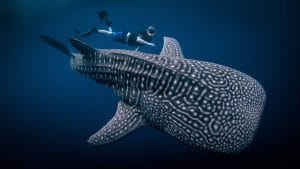
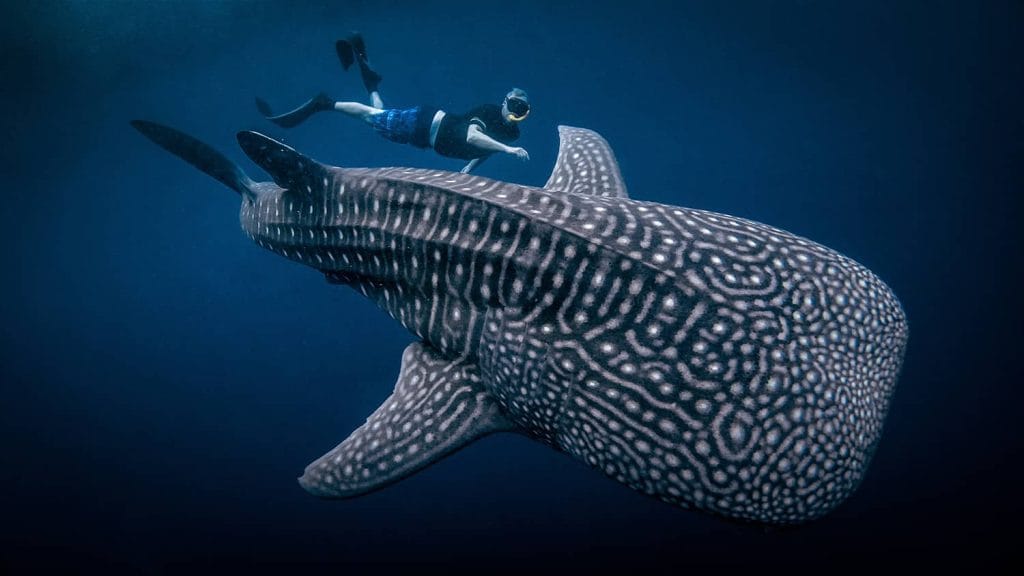
The whale shark is the largest fish in the world — up to 12 metres long and 20 tonnes — but it isn’t a whale, and it doesn’t hunt anything bigger than plankton and small baitfish, filtered through that enormous mouth. Humans simply don’t register as food, and there is no recorded case of a whale shark attacking a human. They are famously calm around swimmers; each one even carries a unique pattern of white spots, like a fingerprint, that researchers use to identify individuals.
The Real Risks Are Ordinary Ones
What actually deserves your attention has nothing to do with teeth:
- Open water. You’ll be swimming off a boat, not a beach. Life jackets are on every boat — wear one the whole time if you’re not a confident swimmer.
- The animal’s size, not its temperament. A 12-metre fish doesn’t need bad intentions to bump you — keep a few metres of distance, especially from the tail, and let the shark set the pace.
- The early start. Pickups run around 2:00 AM from Sumbawa Besar (3:30–4:00 AM from Labuan Jambu) because whale sharks feed when fishermen lift their nets around 6:00 AM. Sleep early the night before.
- Sun and sea state. Dawn rides are usually calm, and April–November is the calmest season; January–March is rougher. The tropical sun gets serious after breakfast — cover up.
How the Tour Is Built to Keep You Safe
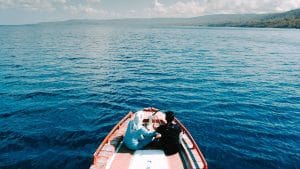
Every trip starts with a safety and interaction briefing before anyone enters the water. On the water, the crew coordinates with bagan owners to find platforms where whale sharks have shown up that morning, and you enter carefully to observe from the recommended distance — never dropped into a scrum. Departures from Sumbawa Besar are led by our own licensed guides with a dedicated trip leader on board. And if you’d rather not swim at all, watching a 10-metre silhouette glide beneath the boat at sunrise is genuinely worth the trip on its own.
Kids and Non-Swimmers
Children can join if they can swim and snorkel comfortably and are accompanied by a parent — for very young kids, we usually suggest a gentler alternative like a Moyo Island day tour instead. Adults who can’t swim well aren’t excluded either: keep the life jacket on the whole time, or enjoy the show from the deck.
Safe for You — and for the Shark
The same rules that keep you safe protect an endangered species: no touching (it damages the protective layer on their skin), no flash photography, and a few metres of distance at all times. If you’re curious how feeding, bagan platforms, and crowding fit into the bigger ethical picture, we’ve written an honest essay on exactly that: Is Swimming with Whale Sharks in Saleh Bay Ethical?
Read Also: Is Swimming with Whale Sharks in Saleh Bay Ethical? An Honest Answer from a Local Operator
Planning Your Saleh Bay Visit
A whale shark encounter is an open-water activity. Follow the crew’s briefing, keep clear of the animal and boats, and stay on board if conditions or your swimming ability make entering the water unsuitable. Across eight-plus years, more than 95% of our guests have swum with at least one whale shark. Ready to see it yourself? Start with the Sumbawa whale shark tour page — or join the shared open trip if you’re traveling solo.
FAQ: Whale Shark Safety
Has a whale shark ever attacked a human?
There is no recorded case of a whale shark attacking a human. They are filter feeders — plankton and small fish, strained through a huge mouth — and people simply don’t register as food.
Do I need to know how to swim?
You don’t need to be a strong swimmer. Life jackets are available on every boat and you’re welcome to keep one on the whole time you’re in the water — or simply watch from the deck.
Can children join the tour?
Yes, if they can swim and snorkel comfortably and are accompanied by a parent. For very young children we usually suggest a more child-friendly alternative like a Moyo Island day tour.
What if the sea is rough?
Check the latest conditions with your operator before departure. A season or early departure time does not guarantee calm water. Follow the crew’s decision if the route or water entry needs to change, and ask about postponement or cancellation arrangements before booking.